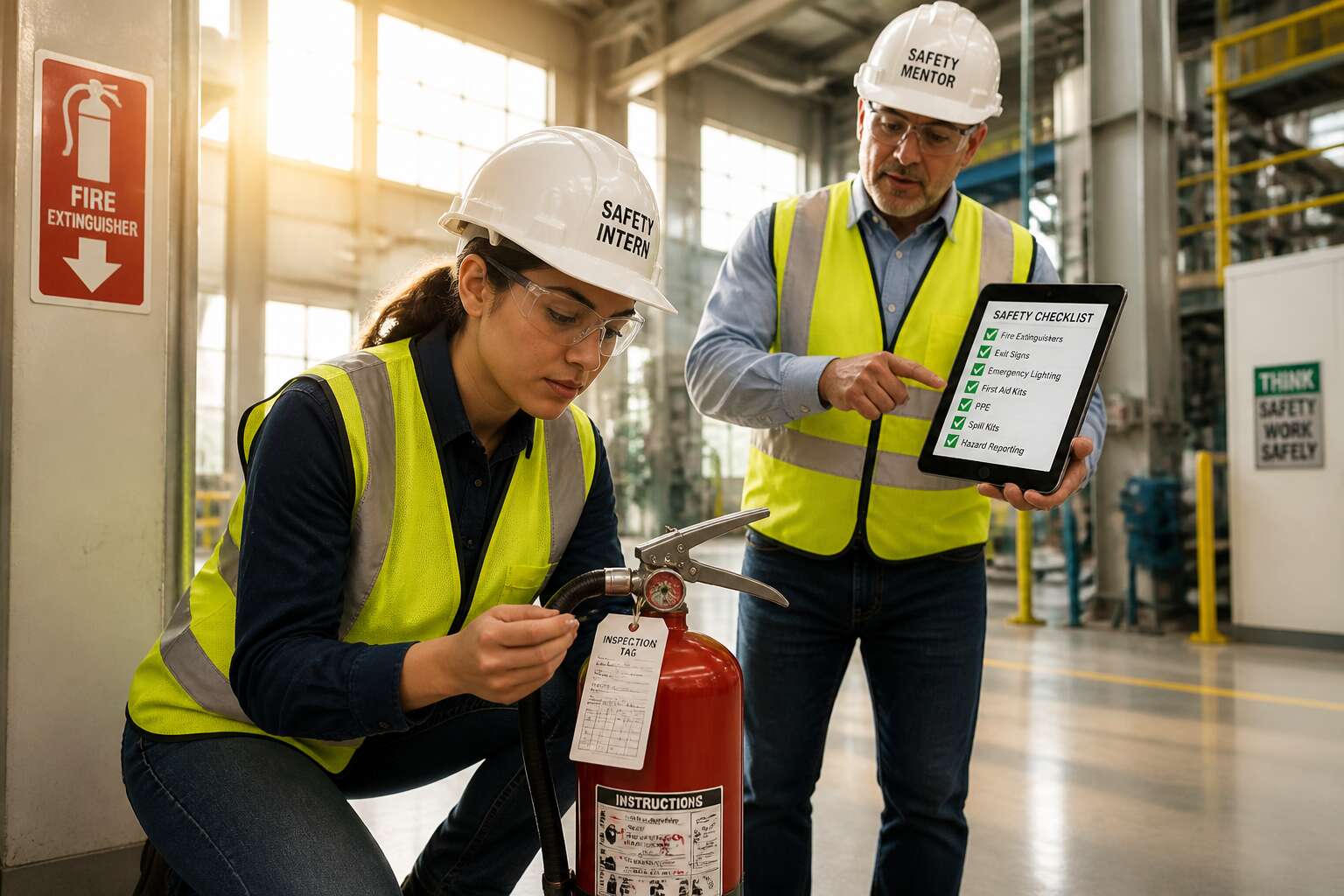
Exploring a Career in Workplace Safety
Core Responsibilities of a Safety Professional
The most effective safety professionals I know say their work goes unnoticed until something goes wrong. That reality lies at the core of workplace safety. In South Africa, it is maintained daily through the actions of dedicated health and safety practitioners.
At the heart of this role sits continuous risk assessment. A safety professional walks warehouses, factories, and construction sites, reading each environment for hazards. They translate the Occupational Health and Safety Act into practical routines and investigate incidents with careful analysis, seeking root causes rather than blame.
Their daily responsibilities include:
- Inspecting premises for compliance and hidden dangers
- Delivering safety training and emergency drills
- Auditing systems to prevent repeated incidents
For students exploring occupational safety internships, these tasks reveal the true shape of the career. Occupational safety internships offer direct exposure to these duties and show how small interventions preserve life. That is no small thing!
Industry Sectors That Hire Safety Trainees
The mining sector employs roughly half a million workers in South Africa, and every one of them depends on safety systems that somebody had to learn before being trusted to manage. For students, that learning often starts in occupational safety internships. The question is which doors those openings lead to.
Occupational safety internships appear across a wider set of industries than most graduates expect. Construction and mining dominate the listings, but food processing plants, private hospitals, and municipal infrastructure departments all hire safety trainees. A trainee in a cold storage warehouse learns about temperature hazards and forklift traffic. A trainee on a road construction project studies traffic accommodation and trench safety. The common thread is exposure to real risk, managed under supervision.
Sectors actively recruiting safety trainees include:
– Mining and quarrying
– Building and civil construction
– Agriculture and agro-processing
– Logistics and distribution
– Energy and chemical production
Occupational safety internships in these sectors reveal how regulatory pressure shapes daily operations. The industry spread also means an intern can build foundational skills somewhere unexpected and still qualify for roles across the economy. That breadth is itself an education.
Emerging Trends in Hazard Prevention
The landscape of hazard prevention is shifting beneath the feet of new safety professionals. In South Africa, where occupational safety internships often start with physical inspections and compliance checks, the next wave of practice is digital. Wearable sensors that monitor fatigue, AI driven risk assessments, and drone based site surveys are becoming common. For interns, this means learning to interpret data streams, not just paper checklists.
Consider these emerging trends:
– Real time biometric monitoring for heat stress in mining environments
– Predictive modelling that flags near miss patterns before they become incidents
– Automated incident reporting via mobile platforms
Each trend demands a different kind of vigilance. An intern who masters these tools early positions themselves for roles that blend field experience with technical insight. The old hierarchy of hazard controls remains, but the methods of identification are evolving rapidly. Occupational safety internships now serve as a gateway to this modern toolkit, where tradition meets transformation.
Types of Hands-On Opportunities in the Safety Field
Corporate EHS Internship Programs
Corporate EHS internship programs in South Africa rarely keep you tethered to a desk. Within the first weeks, you might find yourself walking production floors with a senior advisor, checking lockout systems or examining ventilation logs. That is where occupational safety internships earn their keep. You learn to read hazards through work, not slides.
A typical rotation could include:
- Performing weekly risk assessments alongside line supervisors
- Drafting remedial action plans after near-miss reports
- Leading toolbox talks with maintenance crews
These tasks demand judgment. Observation alone falls short. One day you document noise exposure levels, the next you question why a guard was removed from a press. Every shift offers a different slice of operational reality.
Public Sector Roles with Regulatory Agencies
For every trainee chasing the roar of a factory floor, there exists a quieter, more cerebral path within the public sector. Occupational safety internships here trade the noise of machinery for the weight of legislation. You are not fixing a guard on a press; you are ensuring thousands of presses across the region meet the standard. This is a different kind of gravity.
Working alongside a government inspector offers a panoramic view of the nation’s compliance landscape. You will learn to read a company’s culture through its incident log. The work demands a forensic eye and a thick skin, as you witness both the best and worst of safety practices. You become a guardian of the codes that protect the workforce.
A typical day in this realm might involve:
– Reviewing the legal compliance of factory floor layouts against national standards.
– Assisting with formal investigations following serious incidents.
– Preparing documentation for potential enforcement actions or penalties.
The satisfaction here is not in the immediate fix, but in the systemic change. You influence the baseline from which all industries operate. For those who see safety as a matter of public welfare, this is where occupational safety internships transform into a calling. It is about protecting an entire regional economy, one audit at a time.
Construction and Manufacturing Placements
Construction sites in South Africa account for roughly one in five workplace fatalities. That statistic follows you during every walkthrough in these occupational safety internships. You grip rusted handrails. You listen for a grinding conveyor belt missing its bearing. The environment demands urgent attention, and it rewards those who notice early.
Occupational safety internships in construction and manufacturing share a core demand: you learn by acting. Construction placements focus on temporary works inspections, fall protection, and crane safety. Manufacturing placements drill you on lockout procedures and machine guarding. In a single week you might:
- Run a toolbox talk on grinder disc selection.
- Measure noise levels along a packaging line.
- Trace a near-miss report back to its root cause.
These experiences sharpen instinct and verify everything. I still rely on what I learned during my own placement, long after the site went quiet!
Safety Consulting Firm Positions
Consulting firms offer a different rhythm for occupational safety internships. One day you might audit a warehouse’s chemical storage protocols. The next, you could help a client prepare for a Department of Employment and Labour inspection. The variety keeps you alert.
Instead of living inside a single facility, you learn to translate regulations across industries. You quickly discover that a wine farm and a logistics depot share surprising risks. Your mentor might hand you a client’s risk assessment and ask you to find the gaps. Expect to sharpen these skills:
- Conducting gap analyses against the Occupational Health and Safety Act
- Drafting practical recommendations that fit a client’s budget
- Shadowing site walkthroughs in unfamiliar environments
This exposure builds adaptability. You learn to explain hazards to people who are not safety professionals. That clarity becomes your trade, and it is what makes occupational safety internships in consulting so valuable.
Niche Internships in Construction, Oil and Gas, and Healthcare
Picture this: you are on a construction site, and the morning wind carries the sharp smell of fresh concrete and welding fumes. That is where the rubber meets the road for occupational safety internships in the heavy industries. Construction placements demand a specific kind of vigilance. You are not just checking PPE compliance; you are observing the choreography of cranes, the strain on scaffolding, and the fatigue in a crew’s eyes after a long shift. You learn to read the physical environment for hazards that a textbook cannot convey.
Oil and gas internships offer a starkly different rhythm. The environment is controlled, but the stakes are immense. You deal with confined space entry permits and lockout procedures. The pressure to get paperwork perfect is real, because a single missed valve can have catastrophic consequences. You start to understand that a safety officer in this sector is part auditor, part detective. You learn to respect the process, because the process protects lives.
Healthcare placements might not seem like a classic fit, but they offer a unique perspective on occupational safety internships. Hospitals are a maze of biological hazards, ergonomic strain, and psychological stress. Your role here is to observe the flow of people and materials. You might analyze the lifting techniques of nurses or the chemical storage in a lab. This sector teaches you that safety is not just about machinery; it is about protecting people from each other and from their own exhaustion. Here, you develop:
1. Awareness of biological and chemical exposure risks.
2. Skills in ergonomic assessments for repetitive tasks.
3. Insight into managing workplace violence in high-stress wards.
These placements are less about hard hats and more about soft skills. You learn to negotiate safety protocols with busy doctors who think they have no time for you. That negotiation skill becomes your career foundation. Whether you are examining a drill rig or a surgical suite, the core lesson remains: every environment hides its own traps. A good internship trains you to find them before they find you.
Building a Strong Foundation Before You Apply
Relevant Degrees and Academic Pathways
Your academic record carries more weight than you might expect. South African hiring managers routinely screen for specific qualifications when considering candidates for occupational safety internships. An undergraduate degree in safety management, environmental health, or engineering forms a solid base. Postgraduate certificates can help, but they do not replace practical competence.
Before submitting your application, verify that your institution meets South African Qualifications Authority (SAQA) standards. Module content matters more than the name of the degree. Prioritise programmes that cover risk assessment, ergonomics, and labour law. These subjects appear constantly in everyday workplace situations.
- Occupational hygiene
- Incident investigation
- Fire safety and emergency planning
Those focus areas signal readiness to potential supervisors. Short courses through bodies like the South African Institute of Occupational Safety and Health (SAIOSH) often fill gaps in a weaker syllabus.
Certifications and Short Courses That Stand Out
Certifications often speak louder than academic records. A NEBOSH certificate or SAMTRAC course signals that you understand the practical weight of workplace safety. It shows a willingness to invest in yourself before anyone else invests in you.
Short courses from SAIOSH accredited providers fill gaps that degrees leave empty. Fire safety, hazardous chemical handling, or first aid training each build a layer of competence. These credentials do not guarantee placement, but they reduce the risk a company takes when hiring.
Consider stacking these:
– SAMTRAC foundation
– NEBOSH general certificate
– ISO 45001 awareness training
Companies scouting candidates for occupational safety internships look for evidence of proactive learning. Each certification adds credibility, and the combination can set you apart.
Technical Competencies: OSHA Standards, Risk Assessment, and Ergonomics
Academic study seldom prepares you for the smell of a workshop floor or the noise of a live production line. The theoretical world of legislation and hierarchy of controls exists in textbooks. The reality of a workplace is a different creature entirely.
Your technical competencies form the bridge between those two realms. A prospective employer needs to see that you can identify a hazard before it identifies you. The language of risk assessment must feel familiar on your tongue, not like a phrase you memorised for an exam.
The core technical skills for occupational safety internships include:
– Hazard identification and observation techniques
– Basic incident investigation methodology
– Understanding of permit to work systems
– Fire risk assessment fundamentals
– PPE selection and specification
South African workplaces operate under the Occupational Health and Safety Act 85 of 1993. This is your foundational text. Understanding the duties of employers and employees, the role of health and safety representatives, and the function of the Department of Employment and Labour gives you a working vocabulary.
Risk assessment is the heartbeat of the profession. You should be able to walk into a space and mentally map the hazards. Physical, chemical, biological, ergonomic, and psychosocial risks each demand a different lens. Learning to see these layers takes practice, not just reading.
Ergonomics is often overlooked by newcomers. They chase the dramatic dangers of machinery and chemicals, while the quiet damage of poor posture and repetitive strain goes unnoticed. An understanding of anthropometry and workstation design shows a maturity that interviewers recognise. It signals that you appreciate the less visible injuries that plague the modern workforce.
These skills do not require a classroom. They require curiosity and a willingness to observe. Walk through your own environment and assess it. Question why things are placed where they are. Employers searching for occupational safety internships candidates notice this kind of applied thinking during the interview process.
Essential Soft Skills for Safety Professionals
Before you submit your first application, examine your own habits. Safety professionals translate between management and the shop floor. That translation demands patience and a steady temperament. Employers scouting for occupational safety internships watch these soft skills as closely as technical knowledge.
- How you respond to criticism, especially from workers with less formal education than you.
- How you deliver feedback without assigning blame.
- How you handle the boredom of routine inspections.
- Whether you can hold a room’s attention during a toolbox talk without shouting.
Listen more than you speak. Document what you observe. Follow through on small commitments. These quiet behaviours separate a dependable trainee from a brilliant theorist.
Strategies for Landing Your First Safety Role
Crafting a Resume That Highlights Safety Knowledge
A resume is the first witness to your potential, and for occupational safety internships, it must testify with precision. Hiring managers in South Africa’s industrial corridors study every line of a trainee application. They look for evidence that you understand the gravity of the work, not a rehash of textbook headings. I have watched promising candidates lose the opportunity because their resumes read like course catalogues, and it stings every time!
Structure yours to show the substance beneath the coursework:
- A clear statement of your safety-specific objectives
- Practical exposure described with concrete site language
- Your awareness that occupational safety internships demand relentless vigilance, not incidental interest
The resume that earns the interview treats safety as a discipline with its own weight. Write it with that seriousness, and the call arrives.
Networking with Industry Practitioners and Alumni
They say it’s not what you know, it’s who you know, and in the world of occupational safety internships, that adage carries a heavy weight of truth. A polished application gets your foot in the door, but a warm introduction from a credible source often swings it wide open. I have seen candidates with average grades secure phenomenal placements simply because they took the time to build a rapport with someone already inside the industry. It is the quiet, persistent effort of relationship building that separates the hopeful applicants from the successful ones.
The South African safety community is surprisingly tight knit. Practitioners move between sectors, and they talk. Your task is to become a familiar, respected name in that conversation. This is not about bombarding strangers on LinkedIn with generic requests. It is about demonstrating genuine interest and offering value in return for their time. When you attend a site visit or a seminar, your objective is to learn the unspoken rules of the trade, not just to collect business cards.
Consider these practical steps to cultivate your professional circle:
– Reach out to alumni from your university who work in health and safety; they often feel a sense of duty to help those from the same institution.
– Join local branches of professional bodies like SAIOSH and attend their monthly meetings to put a face to your resume.
– Volunteer for safety committees at your current workplace, even if the role is unpaid, to get hands-on interaction with seasoned professionals.
– Ask for informational interviews, and prepare intelligent questions about their career path and daily challenges.
The magic happens when you shift from being a passive observer to an active participant. When you meet a practitioner, ask them about the most difficult risk assessment they have ever managed. Listen more than you speak. People are far more willing to recommend someone who shows a deep respect for the profession. Your persistence in maintaining these connections, even when you are not actively looking for a role, pays dividends when an opportunity arises. The goal is to be remembered when a vacancy for occupational safety internships is announced, and to be remembered as someone who is serious, engaged, and ready to work.
Leveraging University Career Centers and Job Boards
According to the International Labour Organization, over 2.3 million people die from work-related incidents annually. That statistic underscores the weight carried by those entering this field. Your university career center is a repository of unadvertised opportunities, often overlooked by students who rely solely on public portals. These centers maintain direct relationships with recruiters who seek candidates with specific academic training.
Job boards require a targeted approach. Mass applications produce poor results. Instead, identify the organisations that align with your career philosophy. Monitor their postings consistently and tailor your application to demonstrate your understanding of their specific safety challenges.
– Review your university’s career portal weekly for exclusive listings.
– Attend campus recruitment events where safety firms scout for talent.
– Refine your CV with the career center’s advisors before submitting anything.
– Track application deadlines meticulously to avoid missed chances.
The digital landscape is crowded, but persistence and precision in your search for occupational safety internships will yield a position that aligns with your professional aspirations. Treat each application as a deliberate step toward your vocation.
Acing the Behavioral and Technical Interview
Most people assume safety interviews are sleepy affairs where you nod along to hazard statistics. The reality is that interviewers in this niche are often former field inspectors. They have seen things. They will ask questions that probe your instinct for occupational safety internships.
The technical portion is where you prove you understand hierarchy of controls. You might walk through an incident scenario. You should describe root cause analysis without relying on textbook recitals. On the behavioral side, expect situational questions about confronting a stubborn supervisor. Your answer needs to show tact and a commitment to protocol.
– Recount a time you identified a risk that others missed.
– Explain how you handled a coworker who bypassed PPE rules.
– Describe a moment where you had to escalate a concern to management.
The candidates who shine treat this like a conversation with a mentor. They ask questions about near misses and site culture. They show they have thought deeply about the moral weight of the profession. That matters more than remembering every OSHA standard.
Joining Professional Associations and Attending Conferences
Most safety internships are never advertised. The roles circulate through professional associations and conference conversations before they ever reach job boards. In South Africa, bodies like SAIOSH operate as the industry’s central meeting point. Joining them places your name in circulation. Attending conferences reveals the unspoken hierarchy of the field, showing you which consultants command respect and which graduates fade into the background.
To extract value from these gatherings:
- Introduce yourself to speakers after their sessions.
- Ask about their career trajectory, not for a vacancy.
- Volunteer for event logistics.
These strategies make occupational safety internships feel reachable. One conversation at a Johannesburg conference can outweigh a month of online applications.
Maximizing the Value of Your Internship Experience
Setting Personal Learning Objectives and Milestones
Setting personal goals during occupational safety internships transforms passive observation into active skill acquisition. When you define clear milestones, you measure progress against tangible outcomes rather than clocking hours. For instance, I once mapped each week to a specific regulatory standard, from hazard communication to emergency response protocols.
- First month: shadow a senior safety officer during site inspections.
- Second month: draft incident reports under supervision.
- Third month: lead a toolbox talk on your own.
These checkpoints force deliberate engagement. Without them, you might drift through repetitive tasks. The best placements reward those who treat every shift as an opportunity for practical learning. By tracking achievements, you leave with demonstrable competence that persists long after the certificate is filed away.
Building Strong Relationships with Mentors and Supervisors
Here is a secret about workplace safety: experienced professionals can tell you which rules matter most, and they might share that knowledge if you earn their trust. Occupational safety internships give you direct access to this institutional memory, but not if you wait to be approached. Most trainees expect mentorship to arrive on a schedule. It does not.
Make yourself useful to your supervisor. Ask to review past incident investigations. Request honest feedback on your draft reports. Arrive early to site inspections with questions prepared! I have watched a quiet intern become a trusted assistant on a major compliance project simply by asking one seasoned officer, during a tea break, about the worst hazard they had ever faced.
Documenting Projects, Safety Audits, and Training Sessions
Documentation is the quiet architecture of a safety career. Every project you touch, every audit you witness, and every training session you attend builds a portfolio that speaks louder than any reference letter. During occupational safety internships, the paperwork feels tedious until you realise those records are your proof of competence.
Create a personal log of every site inspection you join. Note the hazards identified, the corrective actions proposed, and the reasoning behind each decision. Ask your supervisor to walk you through the official safety audit log, then compare it with your own observations. This practice sharpens your eye for detail. One intern I supervised developed such precise notes that her supervisor began assigning her draft audit summaries. That led to her first paid consultancy offer.
Training sessions offer another layer of documentation. Record the topics covered, the attendees engaged, and the practical gaps you noticed. This reflection turns passive attendance into active learning. A simple habit of writing three reflection points after each session builds a knowledge bank you will draw from for years. Treat these records as a working document, not a scrapbook. They become your interview evidence and your professional compass.
Consider building one comprehensive file that captures your entire internship arc. Include your daily logs, audit checklists, and training notes. Review it weekly. This practice ensures occupational safety internships transform from a fleeting experience into a tangible asset. When a factory manager asked me what single piece of work I was proudest of, I pointed to my compiled observation records. That document earned me a permanent position.
Creating a Portfolio That Showcases Your Practical Skills
In South African industry, a certificate proves attendance; a portfolio proves capability. Occupational safety internships generate dozens of small deliverables, yet most of that work disappears when the term ends. A well-constructed portfolio changes that outcome. It captures practical skills in a form that survives beyond the internship:
- A near miss log you compiled and analysed for patterns
- A hazard identification matrix that became part of a safety file
- A photographic record of corrective actions you helped close out
These artefacts demonstrate judgement rather than mere presence. On a review panel I sat on, the strongest candidate was not the one with the highest marks, but the one who could explain why she prioritised an engineering control over an administrative one. That is the kind of insight occupational safety internships should produce. A portfolio retains that insight. Interviewers respond to tangible work because it gives them a basis for deeper questions about reasoning.




0 Comments